Responsible AI at Apache Software Foundation: Challenges and Opportunities
From its creation in the last century, the Apache Software Foundation has operated on the principle that communities of people from around the world are the best stewards of projects that benefit the public. The corporation that manages the resources is organized as a bottom-up foundation, with decisions about project management left primarily to the projects themselves.
This organizational model has worked well, with communities of projects growing from one project to over 300 projects in just over 25 years. With the spectacular rise of AI, the infrastructure of computing has been fundamentally altered. Anyone who ignores the potential effects of AI will be left behind.
The ASF community has adopted many AI tools recently, and several members are directly involved in creating the environment to help projects integrate these tools into their processes.
This talk discusses some of the beneficial uses of AI as it relates to project management, as well as some of the disadvantages that should be considered as ASF moves forward in the Age of AI. Two major announcements include VP, Responsible AI, and Project Magpie.
Speakers:
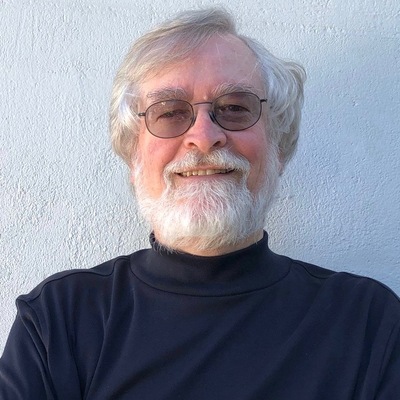
Craig Russell: ASF Member, Incubator PMC member, ASF Board Chair emeritus
I joined Apache as a committer on the incubating JDO project in 2005 and became an Apache Member in 2007. I was appointed Assistant Secretary in 2009 and Secretary in 2010, where I served until 2019. I was elected to the Board of Directors in 2019 and currently serve as a Director.
I was originally attracted to Apache by its approach to governance, where the people doing the work decide what direction to take the project. This is exactly the opposite of how most corporations work, where “the smartest people in the room (managers and executives)” make the decisions.
Once my own project was accepted into Apache, I looked around to see what else I could contribute to, and joined a number of projects where I could help. I also started looking at the intellectual property model of licensing of contributions and licensing of the end products. That led me to start contributing to the Secretary role, processing the “paperwork” granting IP rights to the Foundation.
Recently it has come to my attention that people feel that the Foundation has “too many rules” which go against the free expression that people look for. Looking deeper into this issue, I found that there are some common themes that, if understood better, can make the experience easier.


